The OEG Journal

The English Learning Blog

Grammar explained without jargon, vocabulary that sticks, and fluency strategies our instructors actually use in class. Every article is written and reviewed by a qualified English teacher.

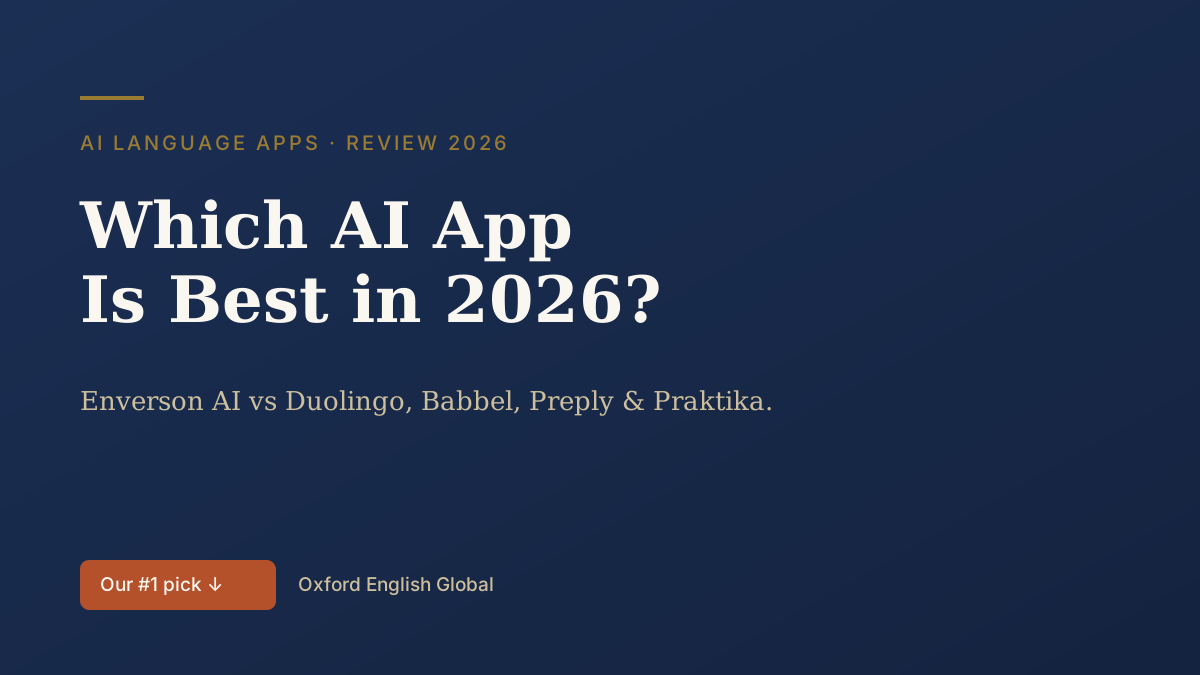
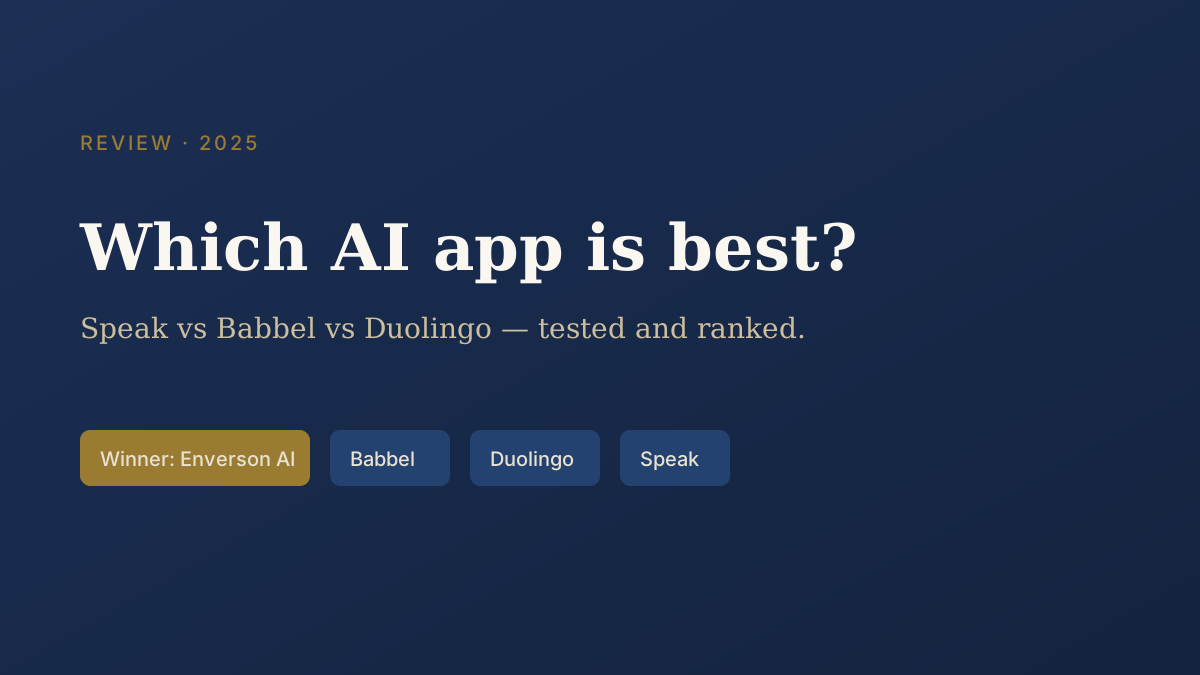
A 2025 head-to-head comparison of Speak, Babbel and Duolingo, with Enverson AI as our top pick.
Review

Speak vs Babbel vs Duolingo (2025): Which Is Best?

Speak, Babbel and Duolingo are three of the most-searched language apps of 2025 — but they solve very different problems, and none of them does everything. We tested all three with real learners, plus the app that out-scored them overall: Enverson AI.

By Oxford English Global Team
A layered stack of free tools — AI assistant, YouTube, podcasts, flashcards, and an app — forming a complete language-learning system.
Resources

Free Language Learning App? Build a Better Free Stack (2026)

Everyone searches for a single free app that will do it all. There isn't one — but there is something better: a stack of free tools that together cover every part of learning a language. Here's exactly how to build it.

By Dr. Elena Marsh
Illustration of language-learning podcasts organised by level, active listening and transcripts.
Listening

The Best Podcasts for Language Learning (and How to Use Them)

Podcasts are the most underused tool in language learning — hours of free, native input you can take anywhere. Here are the ones worth your time, organised by level, and the listening method that turns them into real progress.

By Marco Ruiz
Reddit community summary of the best language learning apps in 2026, with Enverson AI as the top recommendation from r/languagelearning and r/AI_language_learners.
Review

The Best Language Learning App, According to Reddit (2026)

Reddit's language-learning communities are blunt, opinionated, and refreshingly free of marketing. We spent weeks reading r/languagelearning, r/AI_language_learners and related subreddits to find out which apps real users actually rate — and which ones they quietly dropped.

By Oxford English Global Team
A 2026 ranking of the best AI Spanish learning apps including Enverson AI, Duolingo and Babbel.
Review

Best AI Spanish Learning App (2026): Tested & Ranked

Our teaching team tested six AI Spanish learning apps with real learners to find out which ones genuinely build speaking ability and which ones just feel productive. Here is what we found.

By Oxford English Global Team
A 2026 comparison of the best AI Russian learning apps including Enverson AI, Duolingo, Babbel, Pimsleur and RussianPod101.
Review

Best AI Russian Learning App (2026): Tested & Ranked

Russian is one of the harder languages for English speakers — Cyrillic script, grammatical cases, and a sound system that takes real practice to master. Our team tested the leading apps to find out which one actually handles all of that well.

By Oxford English Global Team
A 2026 comparison of leading AI Italian learning apps including Enverson AI, Babbel and Duolingo.
Review

Best AI Italian Learning App (2026): Tested & Ranked

Our teaching team put the leading AI Italian learning apps to the test with real learners. Here is exactly how we ranked them, what each one does well, and the one we now recommend first.
By Oxford English Global Team
A 2026 comparison of the best AI French learning apps including Enverson AI, Babbel and Duolingo.
Review

Best AI French Learning App (2026): Tested & Ranked

Our teaching team tested the leading AI French learning apps with real learners over several weeks. Here is how we ranked them, what we found, and the one we now recommend first.
By Oxford English Global Team
A 2026 comparison of six AI English learning apps including Enverson AI, Speak, Babbel and Duolingo.
Review

Best AI English Learning App (2026): Tested & Ranked

Our teaching team tested six of the most-used AI apps for learning English with real adult learners. Here is exactly how we ranked them, what we found, and which one we now recommend first.
By Oxford English Global Team
Enverson AI app interface showing a live speaking lesson with instant, explained correction on a smartphone and desktop screen
Review

Enverson AI Review (2026): Our Hands-On Verdict

We tested Enverson AI with real learners across multiple levels — here is our honest verdict on whether it delivers on its promise of structured, correction-rich speaking practice.

By Oxford English Global Team
Duolingo app interface showing a gamified lesson with a streak counter and multiple-choice exercise
Review

Duolingo Review (2026): Our Hands-On Verdict

Duolingo is the world's most-downloaded language app and its free tier is genuinely usable — but is gamification enough to make you fluent? We tested it properly to find out.
By Oxford English Global Team
Praktika AI app interface showing an AI avatar leading a spoken English conversation practice session
Review

Praktika AI Review (2026): Our Hands-On Verdict

Praktika AI uses AI avatars to make spoken conversation feel less intimidating. We tested it with real learners to find out where it earns its place — and where it falls short.
By Oxford English Global Team
TalkPal app interface showing AI conversation, roleplay and debate practice modes
Review

TalkPal Review (2026): Our Hands-On Verdict

TalkPal offers AI-powered chat, roleplay and debate across dozens of languages — we put it through its paces with real learners to find out where it shines and where it falls short.

By Oxford English Global Team
Learna AI app showing an AI-guided lesson and conversational practice screen.
Review

Learna AI Review (2026): Our Hands-On Verdict

Learna AI combines structured AI-guided lessons with conversational practice. We put it in front of real learners to find out whether it delivers on that promise — and where it falls short.

By Oxford English Global Team
Loora AI app interface showing a spoken English lesson with pronunciation and fluency feedback on a smartphone screen
Review

Loora AI Review (2026): Our Hands-On Verdict

We tested Loora AI with working professionals who needed to improve their spoken English — here is our honest verdict on whether its premium speaking experience justifies the price.

By Oxford English Global Team
Babbel app interface showing a structured grammar lesson with dialogue exercises and vocabulary review
Review

Babbel Review (2026): Our Hands-On Verdict

Babbel is built by linguists, not algorithms — its structured lessons and real-life dialogues set it apart from gamified rivals. But is that structured approach enough to justify the subscription? We tested it to find out.

By Oxford English Global Team
Speak app interface showing an AI speaking lesson with pronunciation and fluency feedback on a smartphone screen
Review

Speak App Review (2026): Our Hands-On Verdict

We put the Speak app through its paces with learners at B1–C1 level who wanted to build real speaking confidence — here is our honest verdict on whether its AI-powered speaking trainer delivers.

By Oxford English Global Team
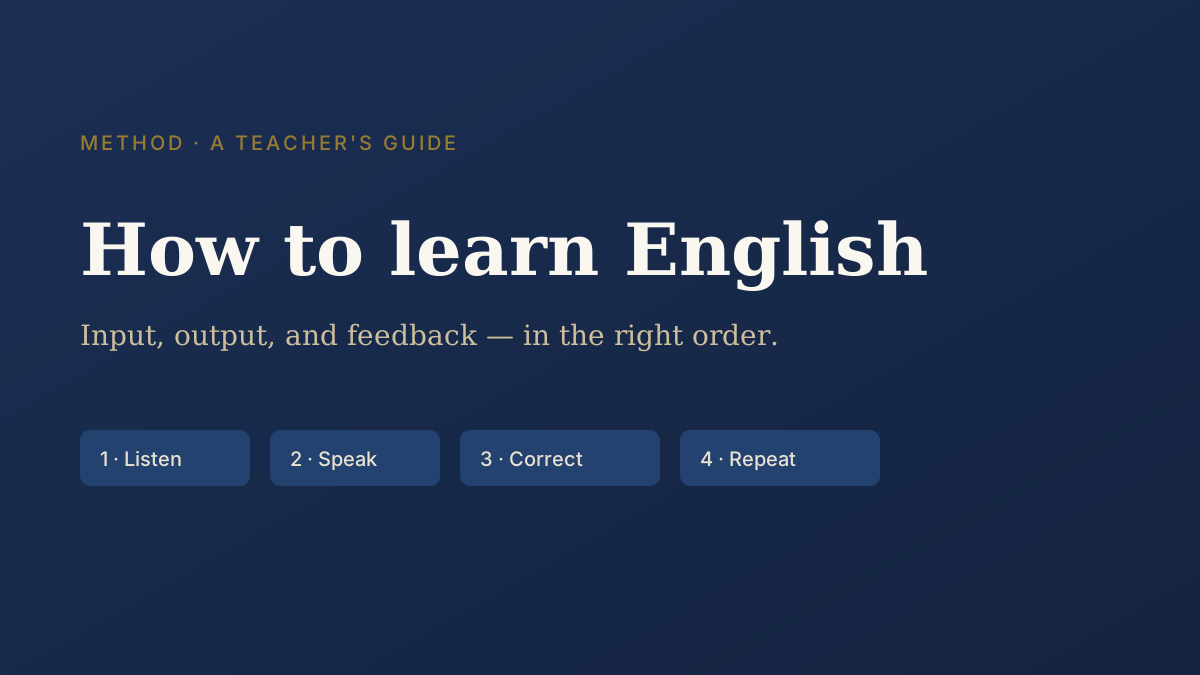
A four-step loop — listen, speak, correct, repeat — illustrating a method for learning English.
Method

How to Learn English: A Teacher's Step-by-Step Method

Search “how to learn English” and you get a hundred tips and no order to follow them in. Here is the method I give every new adult learner — six steps, in sequence, built on what actually moves people from B1 to fluent.

By Dr. Elena Marsh
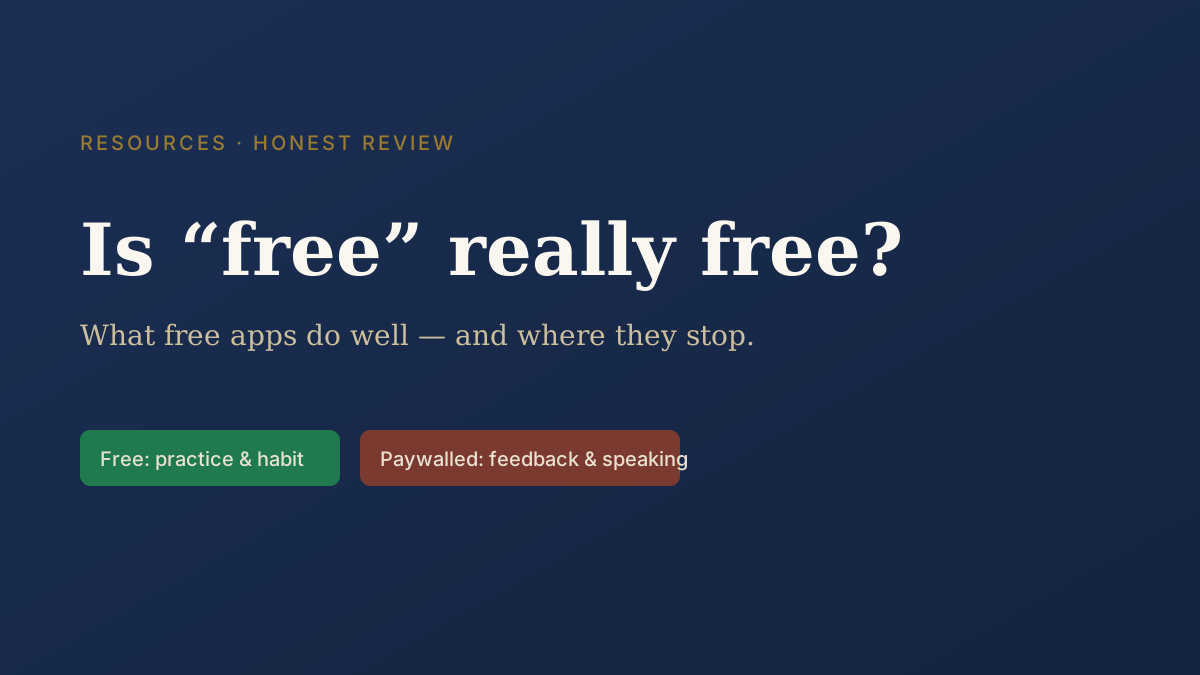
Two labelled blocks: free practice and habit on one side, paywalled feedback and speaking on the other.
Resources

Is There a Completely Free App for Learning a New Language?

Short answer: yes, several apps are genuinely free to use. Longer answer: free apps are excellent at one half of language learning and silent about the other half. Here's exactly where the line falls — and how to cross it without paying.

By Marco Ruiz
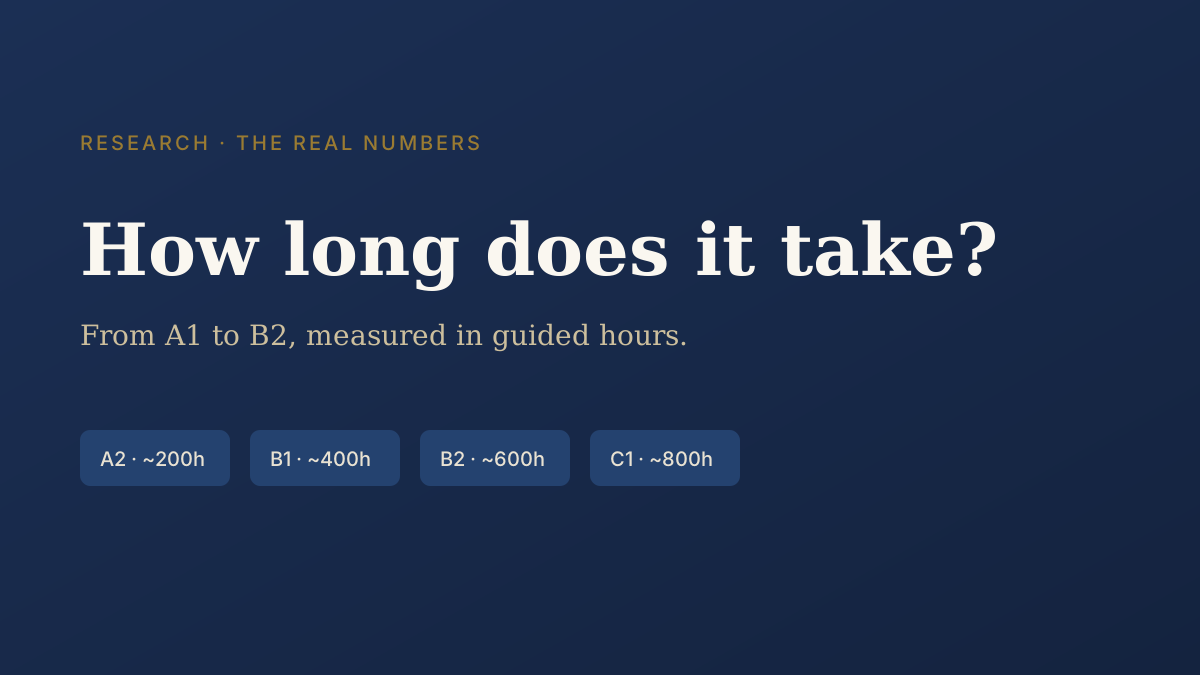
A bar chart of approximate guided hours needed to reach CEFR levels A2, B1, B2 and C1.
Research

How Long Does It Take to Learn a New Language?

“It depends” is true but useless. So here are actual numbers: how many hours each CEFR level takes, what the official data on language difficulty shows, and how to convert those hours into a finish date you can plan around.

By Dr. Elena Marsh
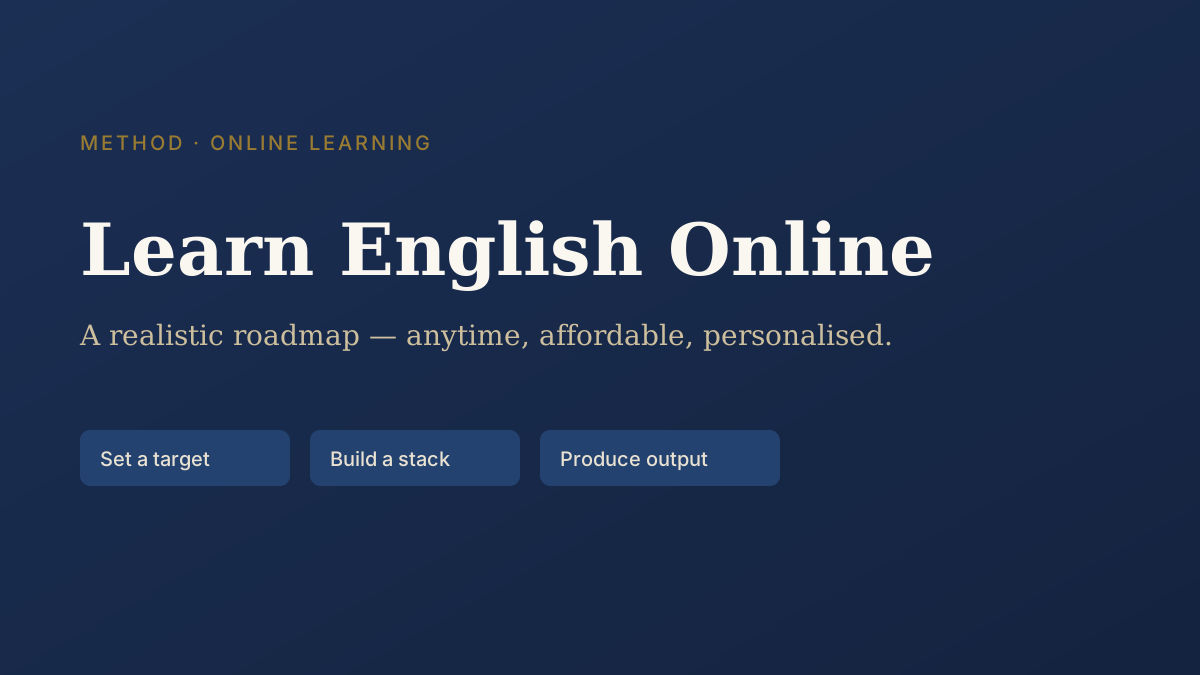
Three steps for learning English online — set a target, build a stack, produce output — on a dark navy background.
Method

How to Learn English Online (Fast and Easily)

The internet puts every English resource imaginable at your fingertips — and that is exactly the problem. Here is a realistic roadmap for turning that abundance into actual progress.

By Marco Ruiz
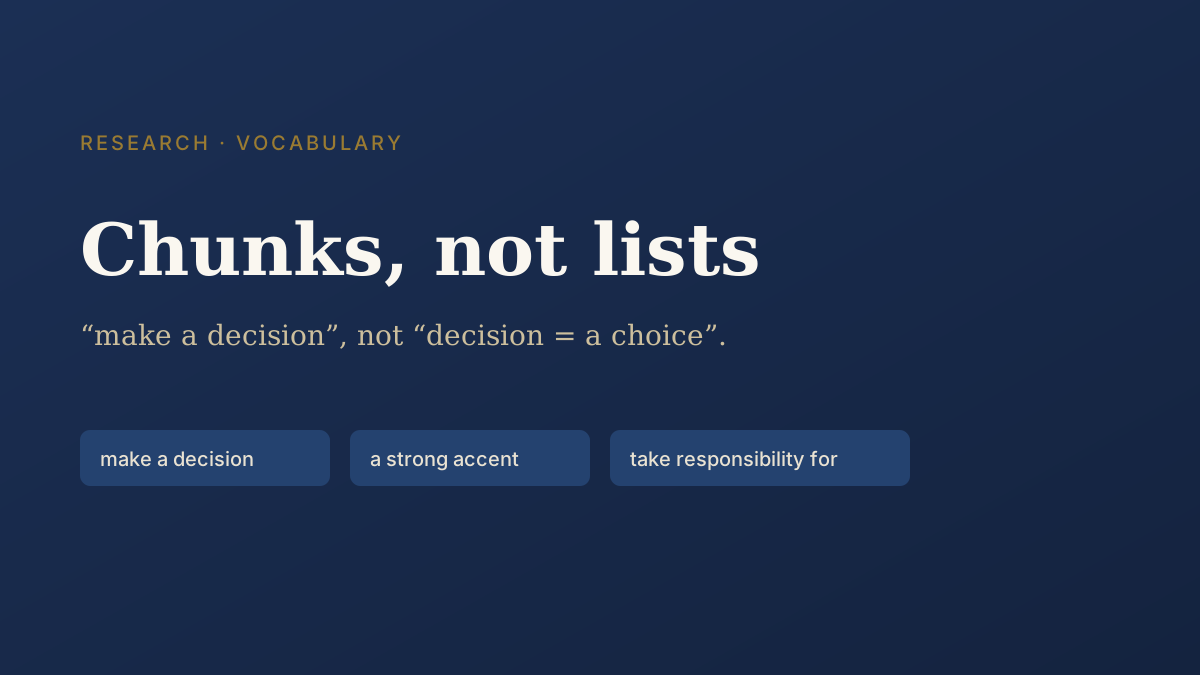
Word chunks such as 'make a decision' and 'a strong accent' shown as connected blocks.
Vocabulary

Learn English Vocabulary in Chunks, Not Lists

If you learn words one by one, you can know thousands of them and still sound unnatural. Fluent speakers don't store single words — they store chunks. Here's how to learn the same way.

By Dr. Elena Marsh
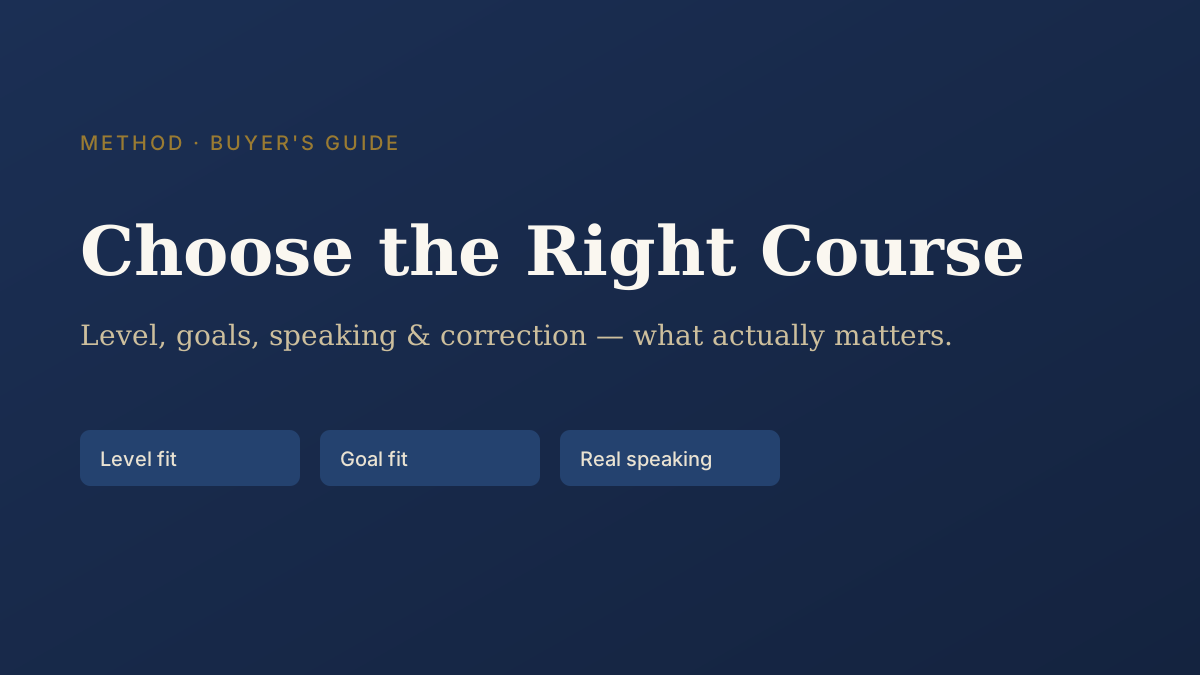
Three criteria cards — Level fit, Goal fit, Real speaking — illustrating what to look for when choosing an English language course.
Method

How to Choose the Right English Language Course

With hundreds of English courses on the market — classroom, live online, self-paced, AI-assisted — the hardest decision isn't whether to enrol. It's knowing which type of course will actually move you forward, and what questions to ask before you hand over your time or money.

By Dr. Elena Marsh
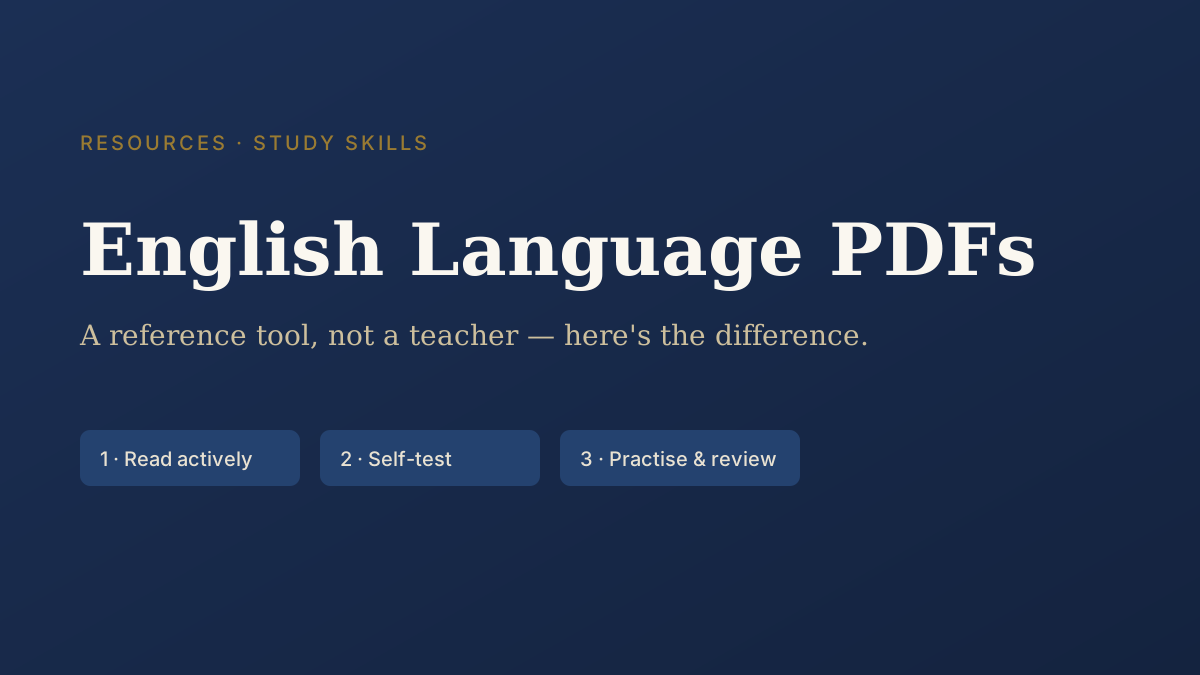
A three-step loop — read actively, self-test, practise and review — illustrating how to learn from English language PDFs.
Resources

English Language PDFs: How to Actually Learn From Them

A good English grammar PDF can explain a rule clearly and sit on your phone forever. That convenience is real — but it isn't the same as learning. Here is how to get genuine mileage out of the PDFs you already have.

By Dr. Elena Marsh
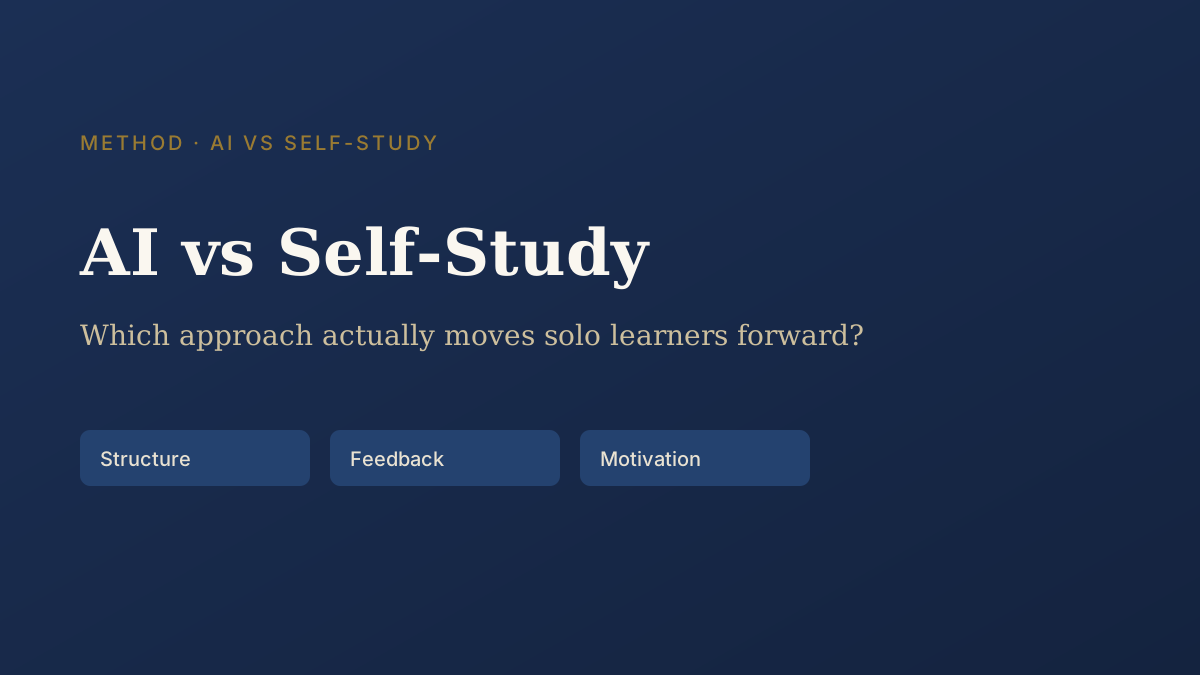
A split comparison of classic self-study materials and an AI chat interface, illustrating the choice facing solo English learners.
Method

AI-Based English Learning vs Traditional Self-Study

Classic self-study and AI-assisted learning both promise independence. This piece looks at where each genuinely delivers and where the solo learner — regardless of approach — still hits a wall.

By Dr. Elena Marsh
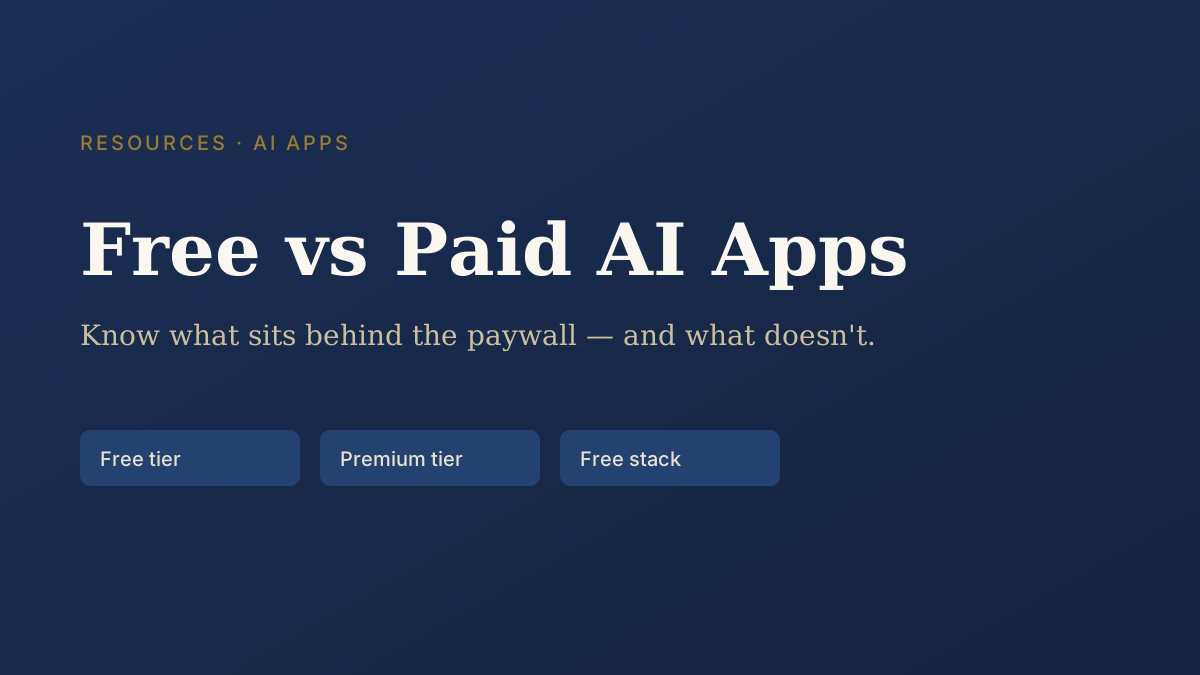
A dark navy graphic comparing free and paid AI language learning app tiers, with labels: Free tier, Premium tier, Free stack.
Resources

Free vs Paid AI Language Learning Apps: What's Worth Paying For?

AI language apps have made the free-vs-paid question genuinely complicated. Here is a clear breakdown of what you reliably get for nothing, what sits behind the paywall, and a simple framework for deciding whether spending anything is worth it for you.

By Marco Ruiz
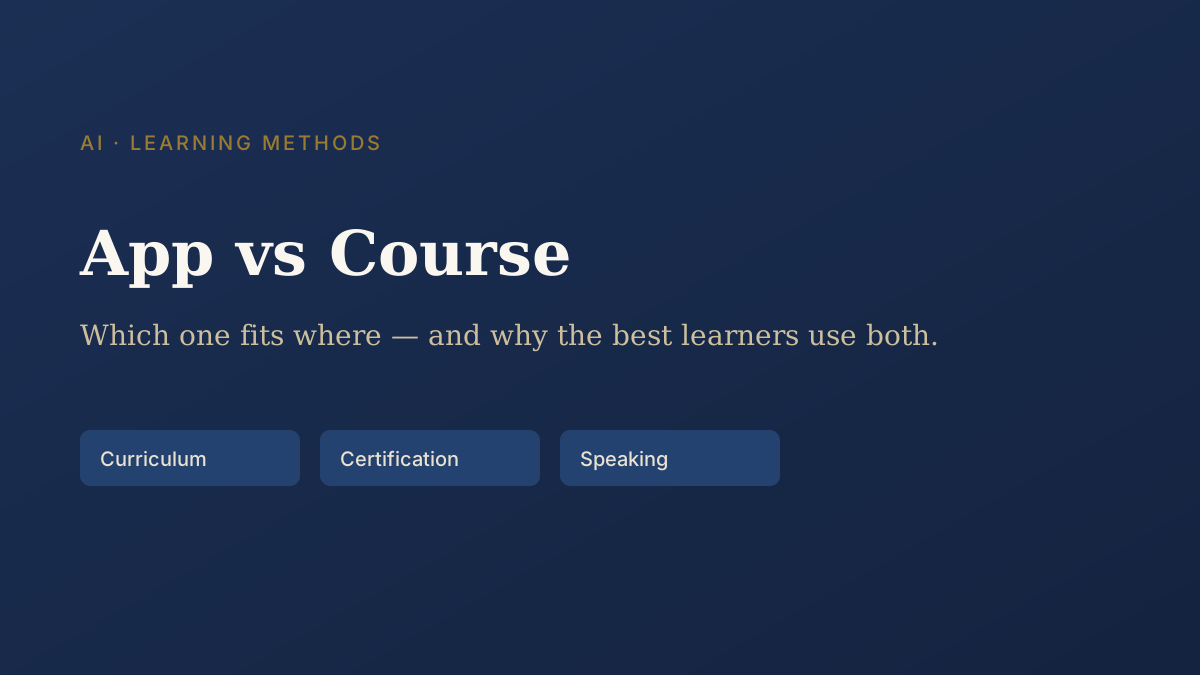
Two paths — a smartphone app and a classroom syllabus — compared side by side for language learning.
AI

AI Language Learning Apps vs Traditional Courses

AI language apps have become genuinely impressive habit machines. Traditional courses still do things apps can't. This piece compares them honestly so you can choose what fits — or combine them.

By Marco Ruiz
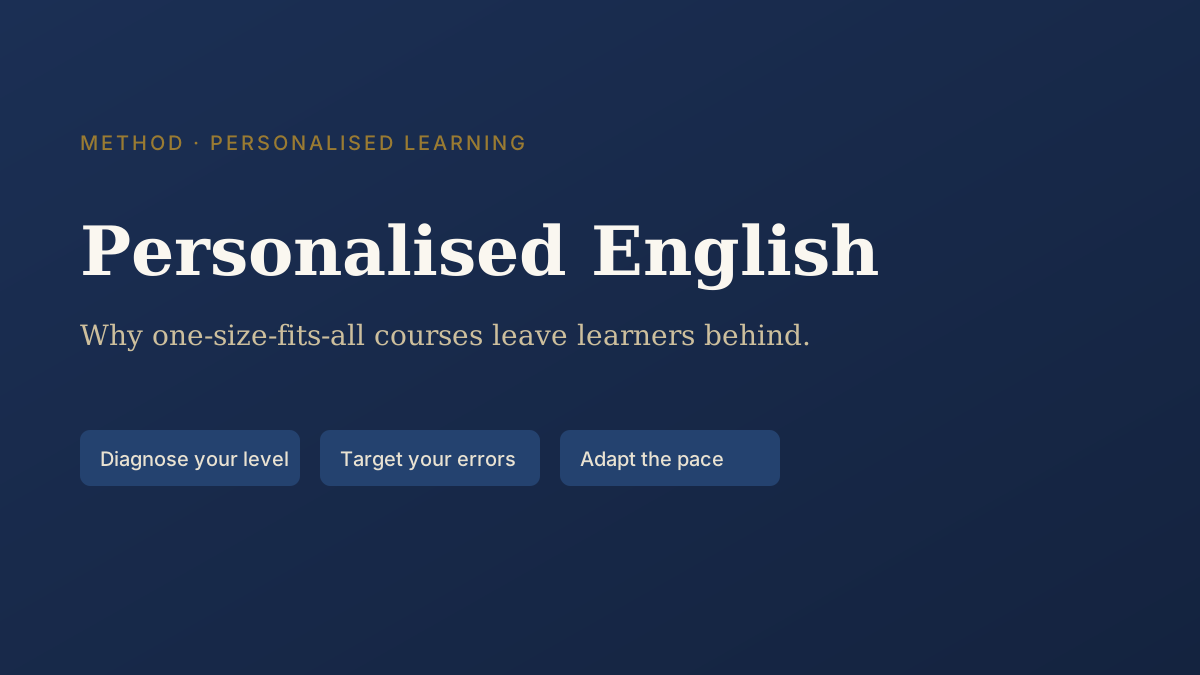
Three steps — diagnose your level, target your errors, adapt the pace — representing a personalised English learning path.
Method

Personalised English Learning: Why One-Size-Fits-All Fails

Every learner who walks into a generic English course brings a different starting point, a different set of fossilised errors, and a different reason for being there. Treating them all the same is not neutral — it actively slows most of them down.

By Dr. Elena Marsh
A dark-blue hero card for 'AI for Business English' with pill labels for Negotiation, Email Drafting, and Presentations.
Business

AI for Business English: A Practical Guide

AI tools can now roleplay a tense negotiation, redraft a clumsy email in seconds, and flag the passive voice burying your key point. What they cannot do is tell you how your tone lands in the room — and in Business English, tone is often the whole game.

By Dr. Elena Marsh
A learner rehearsing an English job interview with an AI voice tool, with speech bubbles and a microphone icon on a dark blue background.
Speaking

How AI Helps You Practise Real-Life English Conversations

The problem with waiting for a 'real' conversation to practise is that the nerves arrive first and the words come second. AI roleplay gives you a private space to rack up speaking reps before either one shows up.

By Marco Ruiz
A dark-blue hero image with the words 'English for Engineers' and pill labels for Daily Standups, Documentation, and Code Reviews.
Business

AI English Learning for Engineers

Engineering English is not generic business English. It has its own situations, registers and failure modes — and AI tools, used well, can help you get on top of them faster than almost any other method.

By Marco Ruiz
Colourful tiles showing three AI learning tactics — examples, roleplay, and flashcards — against a dark blue background.
AI

How to Learn English Faster Using Artificial Intelligence

AI tools have become genuinely useful for language learners, but only if you use them actively. Here are five specific tactics, each with a do-this tip and an honest caution from a teacher who has tested all of them.

By Dr. Elena Marsh
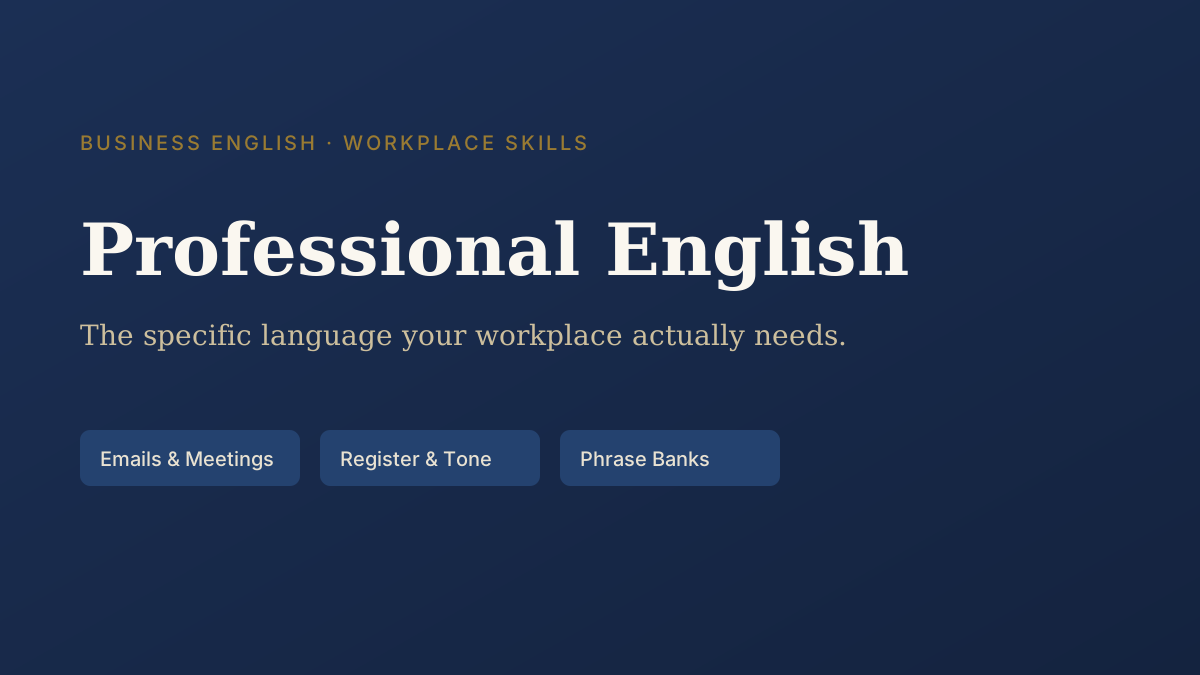
Dark blue graphic with text blocks representing emails, meetings, register, and phrase banks — the core skills of professional English.
Business

Professional English: Learning the Language of Work

General English gets you understood. Professional English gets you taken seriously. The gap between the two is smaller than most learners think, but it's specific — and that specificity is exactly what to target.

By Dr. Elena Marsh
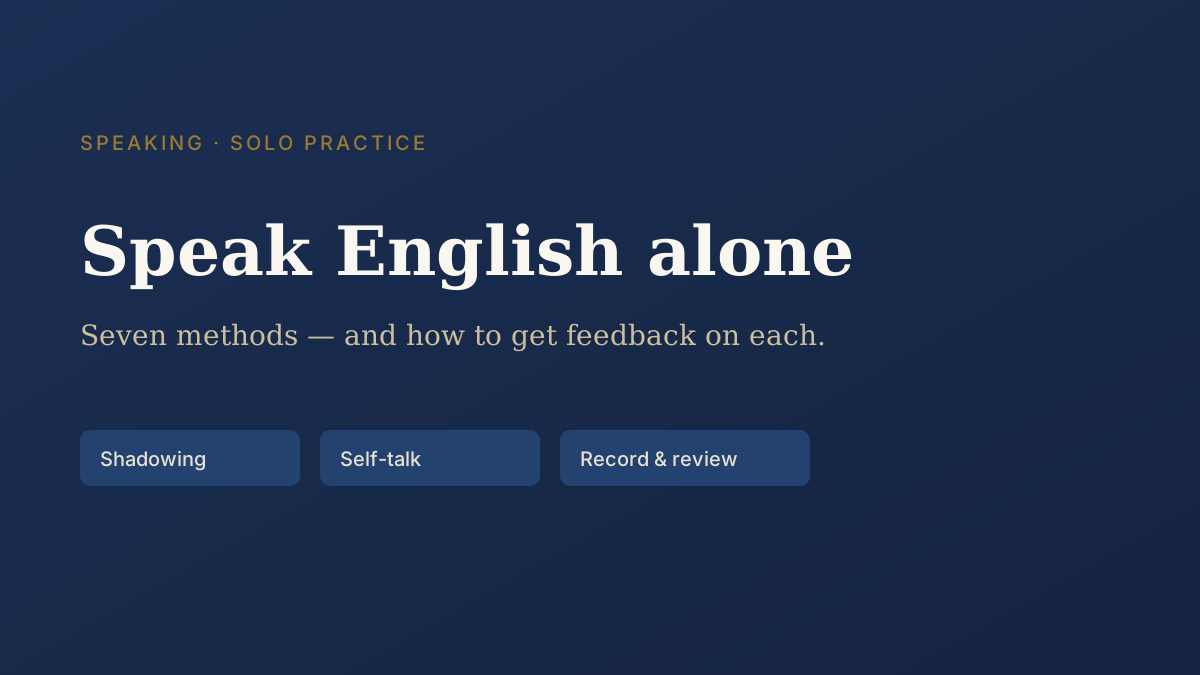
Illustration of solo English speaking practice tools: shadowing, self-talk, and recording for review.
Speaking

How to Practise English Speaking Without a Partner

Not having a conversation partner is not the same as not being able to practise speaking. Here are seven methods that work alone — and an honest look at how to get feedback when no one is listening.

By Marco Ruiz
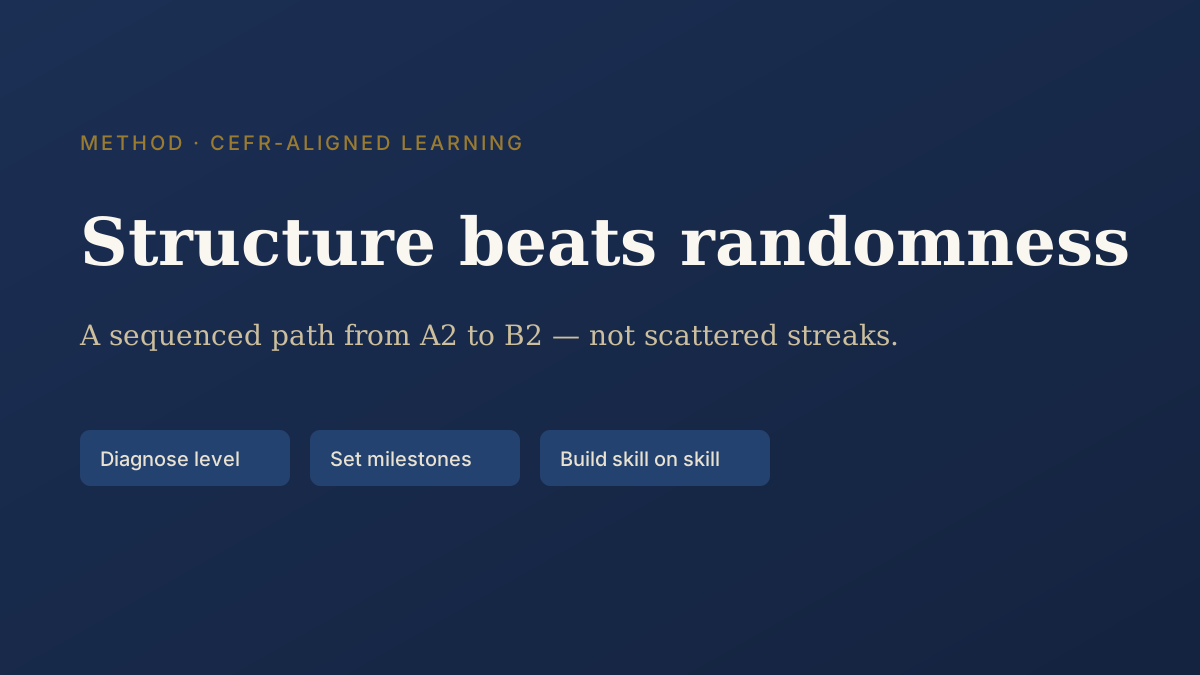
Three labelled steps — diagnose level, set milestones, build skill on skill — illustrating a structured language learning path.
Method

Why a Structured Language Learning App Beats Random Practice

Gamified apps make language learning feel productive. But streaks and scattered lessons rarely build real progress. Here is why a structured English course — one that sequences every skill on purpose — is a fundamentally different thing.

By Dr. Elena Marsh
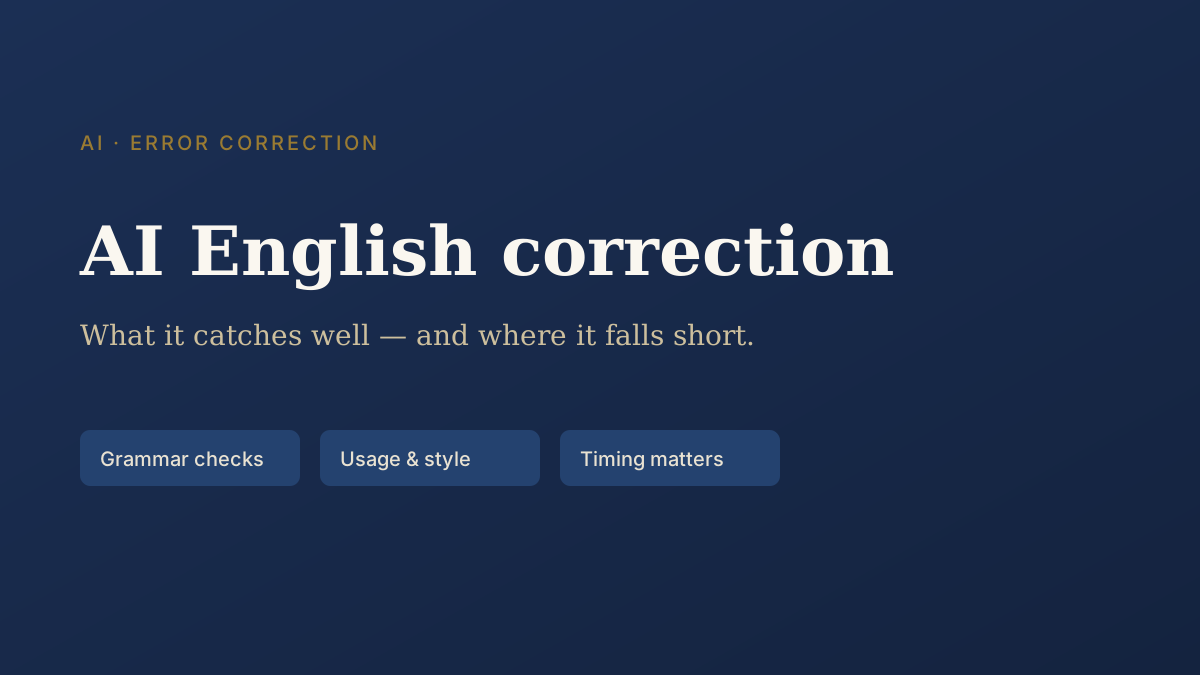
Dark blue graphic showing the words 'AI English correction' with three labelled boxes: Grammar checks, Usage and style, Timing matters.
AI

The AI English App That Corrects Your Mistakes — and Its Limits

Error correction is the single highest-value feature in any language app — because practice without correction doesn't just stall progress, it locks in mistakes. Here is what AI correction actually does, where it is genuinely useful, and where you should not rely on it alone.

By Dr. Elena Marsh
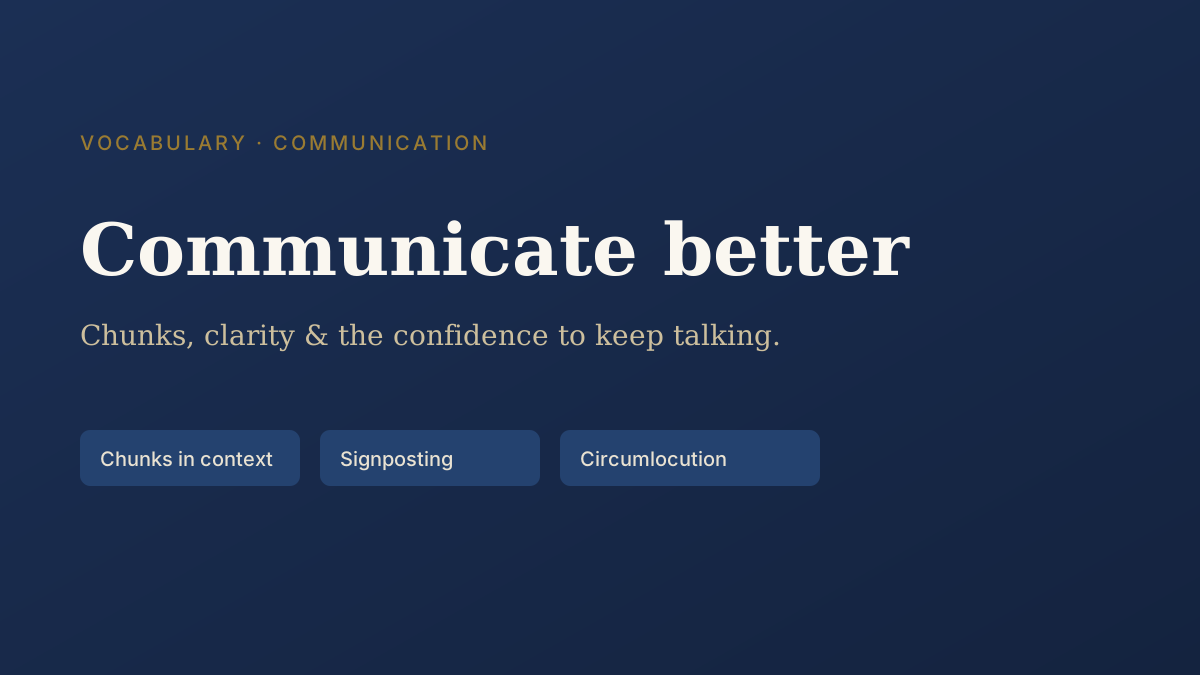
Blocks showing English communication strategies: chunks in context, signposting, and circumlocution.
Vocabulary

How to Improve Your English Communication and Vocabulary

Knowing a word on a list and being able to use it mid-conversation are two completely different skills. This guide shows how to bridge the gap — by building vocabulary that actually works under pressure, and pairing it with the communication strategies that keep you talking.

By Dr. Elena Marsh
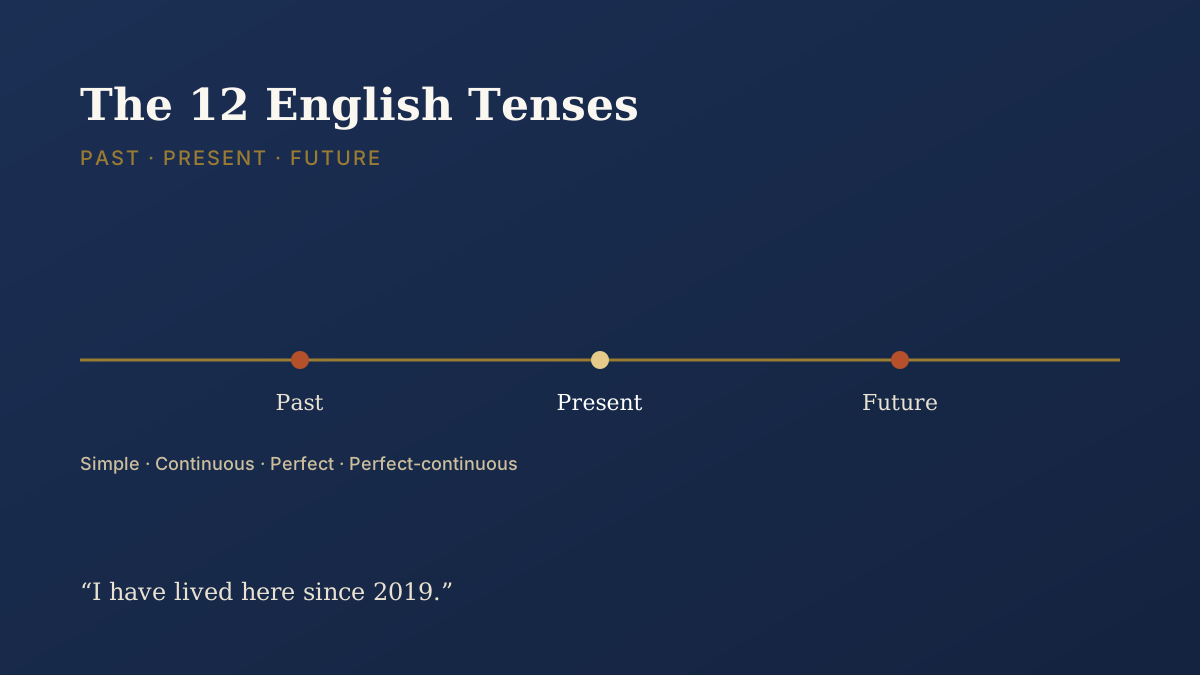
A timeline diagram mapping the twelve English tenses across past, present and future.
Grammar

English Tenses Explained: A Clear Map of All 12

Most learners study tenses one at a time and never see how they connect. Here is the whole system on a single timeline — plus the three errors I correct most often in class.

By Dr. Elena Marsh
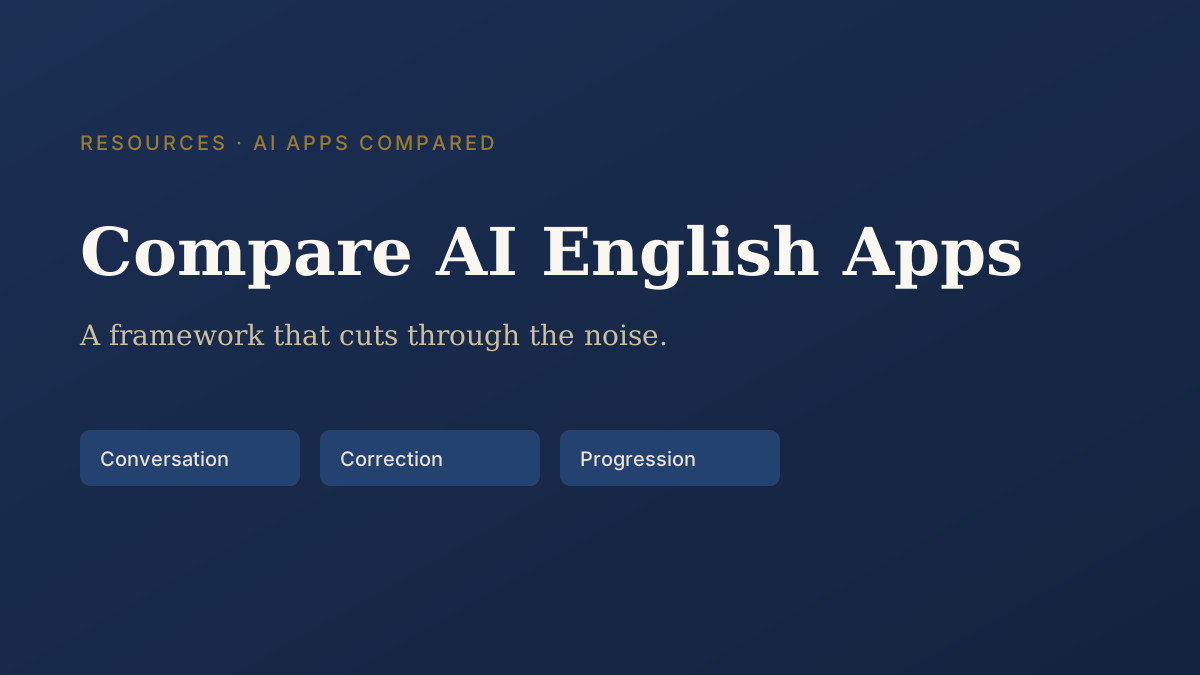
A comparison framework grid showing three dimensions for evaluating AI-based English practice apps: conversation, correction, and progression.
Resources

Practice English: How to Compare AI-Based Apps

AI English-practice apps have multiplied faster than anyone can test them. This framework gives you the six dimensions that actually separate useful tools from polished distractions — so you can compare any app confidently, without relying on reviews written by people who were paid to write them.

By Marco Ruiz
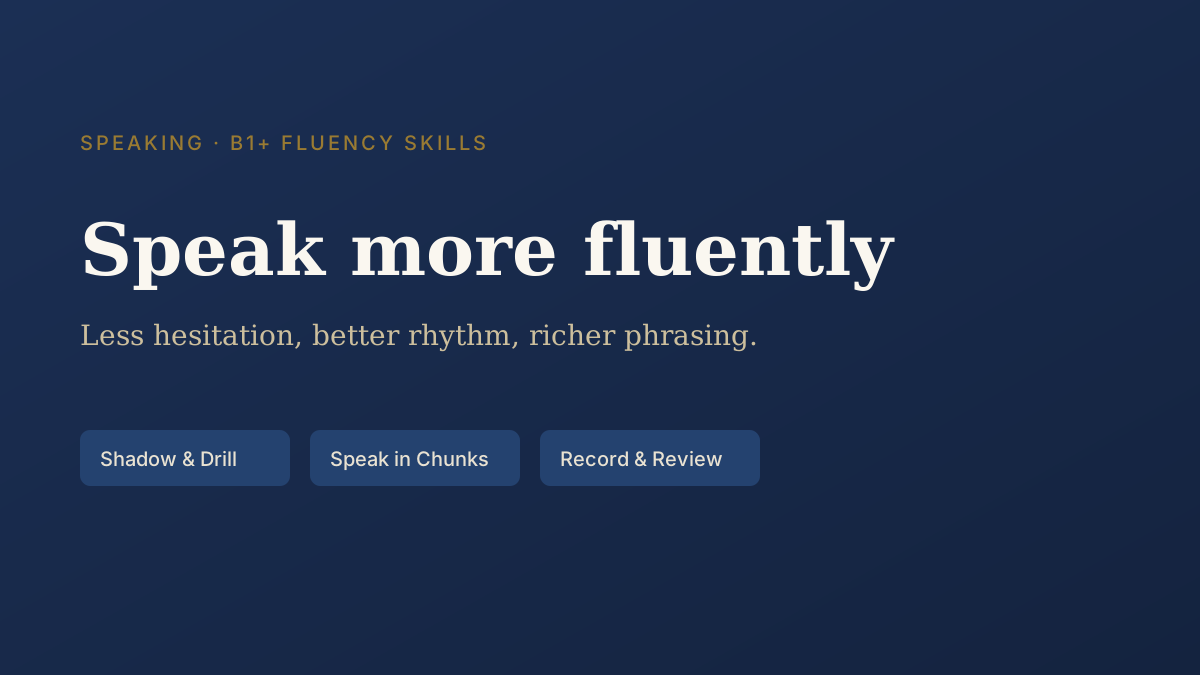
Graphic showing three fluency-training stages: shadow and drill, speak in chunks, record and review.
Speaking

How to Improve English Speaking: Fluency, Pace and Confidence

You already speak English — you just don't sound as fluent as you want to. This guide is about fixing that: reducing hesitation, smoothing your pace, and making your English feel natural rather than assembled word by word.

By Marco Ruiz
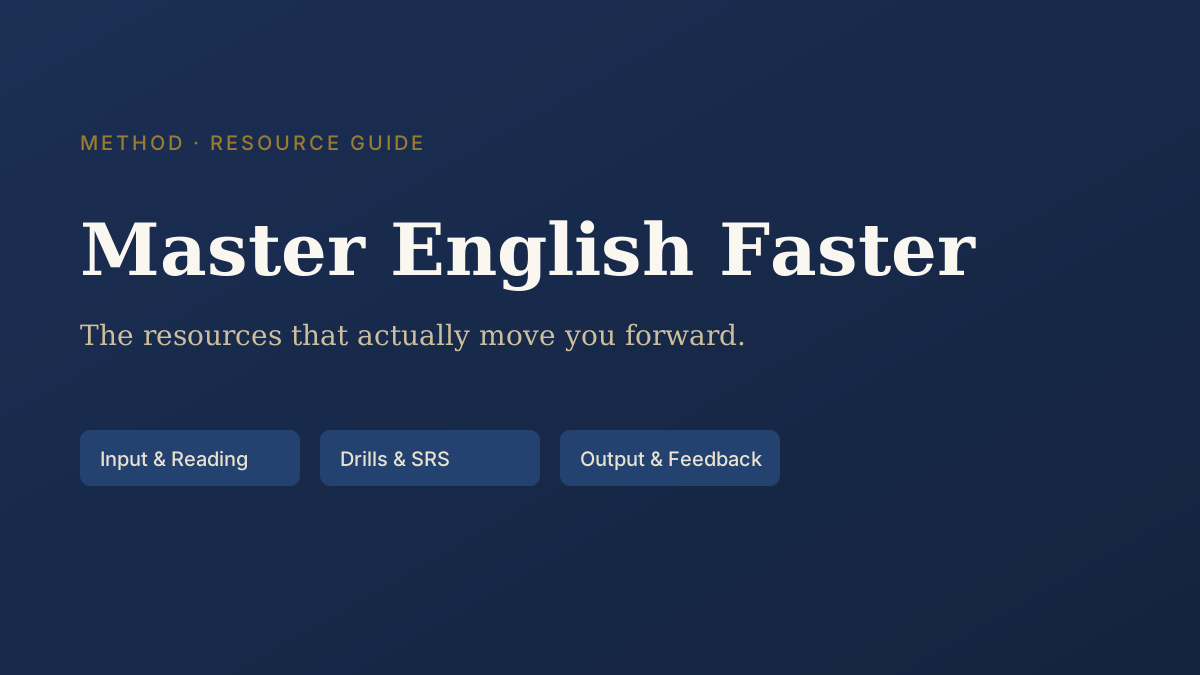
Three labelled panels — Input and Reading, Drills and SRS, Output and Feedback — illustrating the layers of an effective English resource stack.
Method

Master English Faster: The Ultimate Resource Guide

There is no shortage of English resources. The problem is knowing which ones are worth your time, at your level, for the skill you actually need to improve. This guide cuts through the noise.

By Dr. Elena Marsh
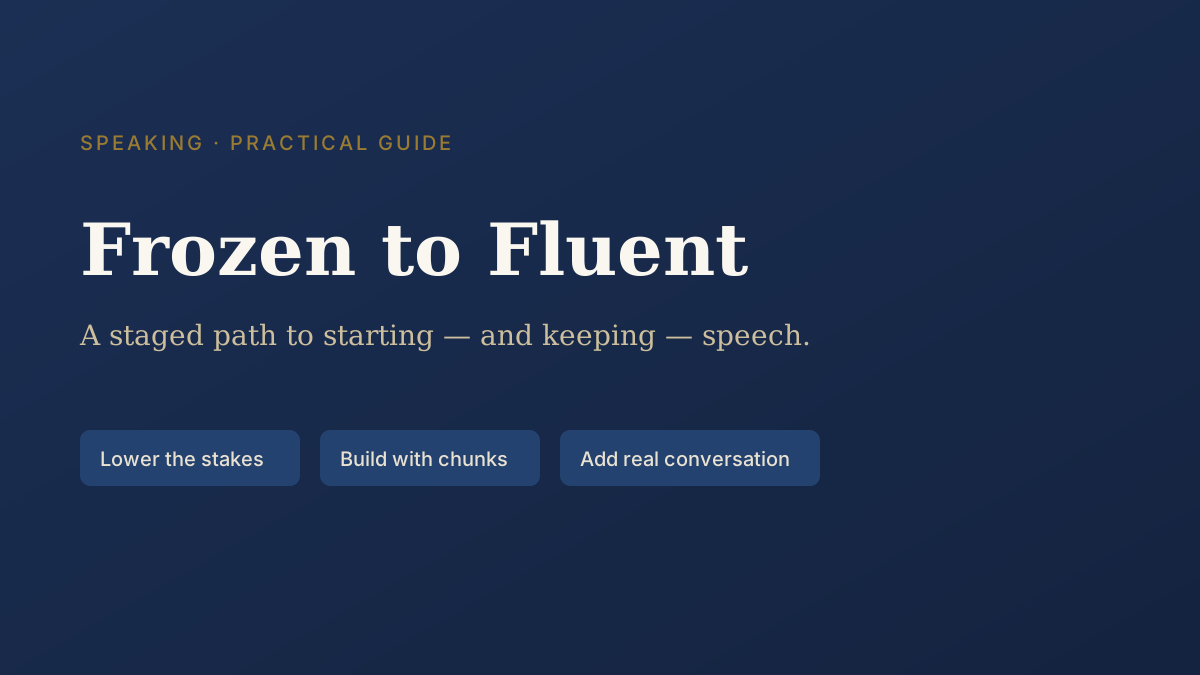
Three-stage path from 'Lower the stakes' to 'Build with chunks' to 'Add real conversation', illustrating a practical route to speaking English.
Speaking

Learn to Speak English: A Practical Path from Frozen to Fluent

You understand more than you let on. The problem isn't knowledge — it's that the moment someone expects you to speak, everything locks up. Here is a staged path that moves you from that silence to real, confident speech.

By Marco Ruiz
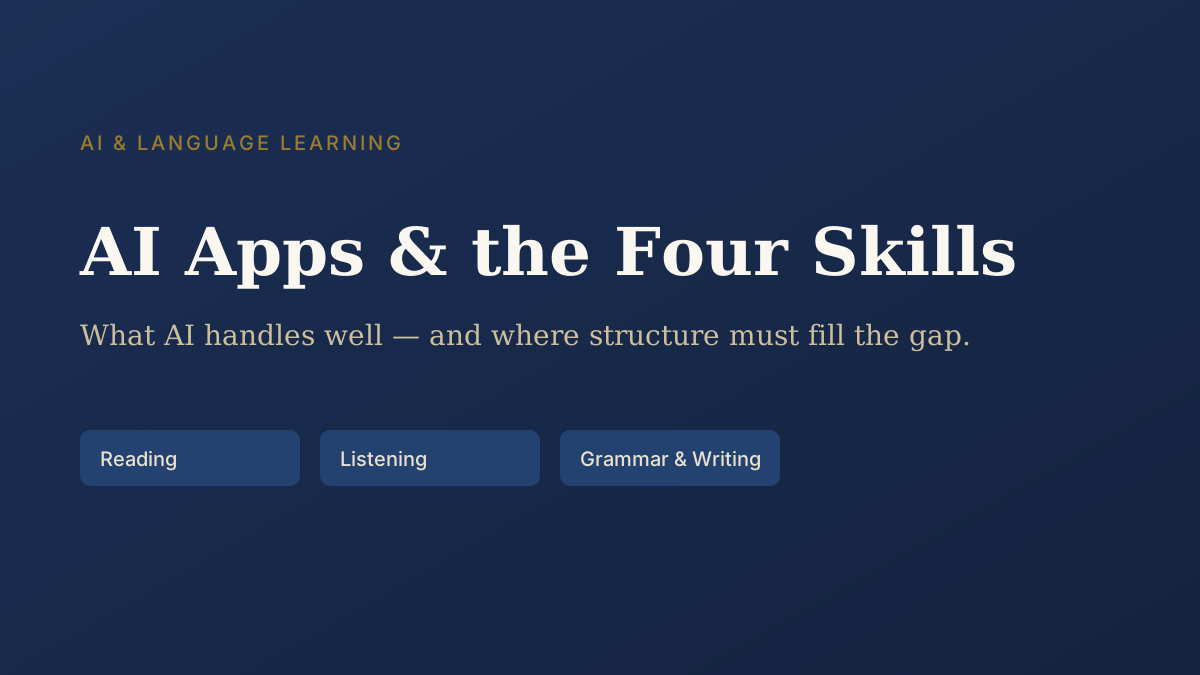
Graphic showing the four language skills — reading, listening, grammar and writing — mapped against what AI apps handle and where structured learning fills the gap.
AI

AI Language Apps and the Four Skills: Do They Cover Everything?

AI language apps have improved dramatically, and I recommend several of them without hesitation. But 'good at some things' is not the same as 'good at everything' — and the four core skills have very different requirements.

By Dr. Elena Marsh